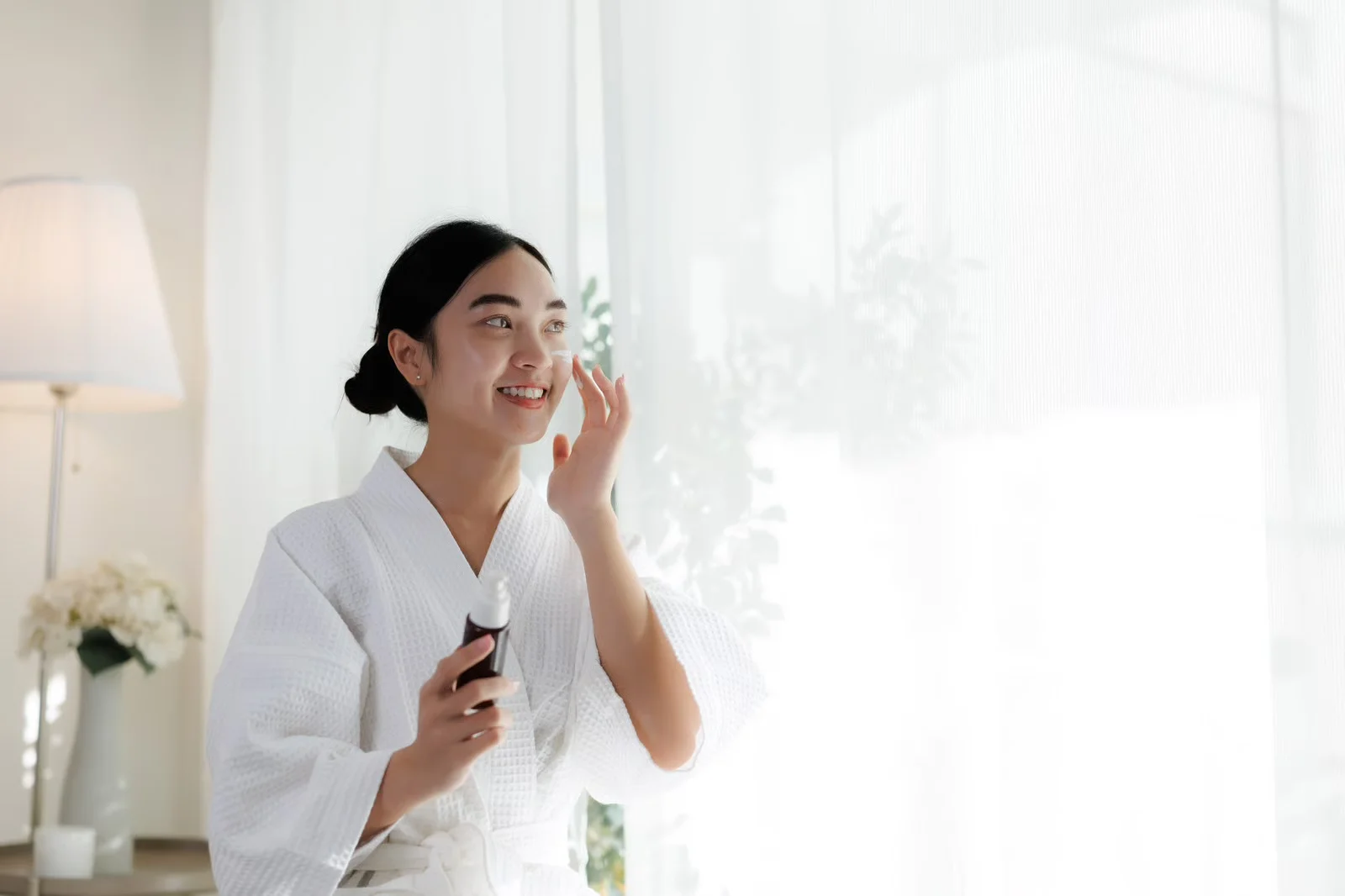
Your bridal skincare timeline starts months before the wedding, giving your skin time to become healthy, hydrated and balanced. At Wedded Wonderland, we see skincare as the foundation for polished wedding makeup, hairstyles and every photographed detail. This guide takes you from your first consultation to the wedding morning, with treatment timings and practical advice along the way.
Start your bridal skincare timeline six to twelve months before the wedding if you want to treat acne, pigmentation, redness or scarring. If your skin only needs refining, three to four months is enough, and it is also the minimum for any treatment with downtime.
Skin renews roughly once a month, more slowly with age. Corrective treatments usually need three or more sessions weeks apart, and retinoids can take twelve weeks to show results. Add time for any reaction to settle, and six months is a realistic runway.
When | Focus | What to do |
12 months | Foundation | Consultation, simple routine, daily SPF |
6 to 12 months | Correction | Laser, peels or microneedling; start a retinoid |
3 to 4 months | Refinement | Review progress, finish treatments with downtime |
6 weeks to 1 month | Stabilisation | Injectables, final extractions, freeze your routine |
1 to 2 weeks | Calm and hydrate | Hydrating facial, pause actives |
Wedding morning | Prep | Your usual routine and SPF |

A dermatologist or experienced dermal clinician will assess your skin, confirm what can be treated in the time you have and schedule treatments so nothing clashes. Share your wedding date, season and location, since sun and climate shape the plan.
Ask about their qualifications, especially for lasers and injectables, and have any unusual mark checked before it is treated.
Four basics cover most needs:
a gentle cleanser
a moisturiser suited to your skin
a morning antioxidant serum such as vitamin C
daily sunscreen
Add one new product at a time and give it a few weeks, so you know what works and what causes a reaction.
Sunscreen protects every result you build, especially once treatments leave skin sensitive to UV. Use a broad-spectrum, water-resistant SPF50+, about a teaspoon for the face, neck and ears. Apply it 20 minutes before going outside and reapply every two hours.

This is the time for treatments that need several sessions and healing time:
Sun damage: pigment lasers or IPL
Redness: vascular laser
Dullness and uneven tone: chemical peels
Texture and scarring: microneedling
Most need three or four sessions, four to six weeks apart.
LED therapy can run alongside them and continue until the wedding, since it has no downtime.
Retinoids are among the most researched ingredients for acne, texture, fine lines and pigmentation. Expect some dryness, flaking or purging in the first month, and allow twelve weeks or more for results.
Start with a pea-sized amount two or three nights a week and build up slowly. If you are pregnant, breastfeeding or planning a pregnancy, check with your doctor first.
Deeper skin tones are more prone to PIH, where a breakout or irritation leaves a dark mark that can last for months and darkens in the sun. Strong lasers and deep peels can trigger it if they are not matched to your skin type.
Make sure your provider assesses your skin type before any laser or light treatment, and expect a gentler, slower plan. Daily sunscreen, a retinoid and ingredients such as azelaic acid or niacinamide often do much of the work with less risk.
Book a check-in with your skin professional to decide whether you need another session, a product change or more of the same. Photos taken in the same daylight every few weeks make gradual progress easier to see.
This is the last window to add an exfoliating acid or vitamin C serum. Start with a low strength and stop if redness, stinging or flaking persists.
Complete resurfacing, deeper peels and microneedling now, since the final session still needs several weeks to heal and show results.

Anti-wrinkle injections take up to two weeks to take full effect, and fillers can cause swelling or bruising for several days. Book both at least four weeks out to allow for touch-ups. If it is your first time, try a round three months ahead to see how your face responds.
Both are prescription treatments in Australia and many other countries, so choose a qualified medical practitioner and ask which product they use.
Book your last facial with extractions at least four weeks out, as redness and marks can take weeks to clear.
Six to eight weeks out, book the facial you plan to have before the wedding. How your skin looks over the following week shows the best timing for the final one.
Timings vary between guides because the right date depends on the treatment, your skin's history and whether you have had it before. A familiar hydrating facial can sit a week out, while a first-time treatment or extractions need a month or more.
From a month out, keep your bridal skincare timeline exactly as it is. For sensitive skin, freeze it at six to eight weeks.

Have your final facial now, focused on hydration and glow, with no extractions or peels. If your skin stays pink for days afterwards, book it two weeks out.
Pause retinoids and exfoliating acids a week before, and rely on:
hydrating serums
a barrier-supporting moisturiser
sunscreen
Hyaluronic acid, glycerin and ceramides suit this stage because they hydrate with little risk of irritation. Prioritise sleep and water too, as both show quickly on skin.
The day before, cleanse gently, moisturise well and skip anything new. A hydrating mask or eye patches you have used before are fine.
In the morning, use your usual routine with a light, water-based moisturiser and sunscreen, which layers smoothly without pilling. Let your skin settle before makeup.
Avoid picking, since a blemish is easier to conceal than a scab. Hold an ice cube wrapped in a clean cloth on it for a few minutes, then apply a hydrocolloid patch to help it flatten overnight. If you have caught the sun, tell your makeup artist early.

Book a consultation now and pick one focus. Light peels, gentle laser and LED can still help if the last session is at least four weeks out. Keep any retinoid you already use, and start a new one only with professional guidance.
Focus on hydration, sunscreen and consistency, with a hydrating facial or LED series if you like. Save corrective treatments for after the wedding, and check timing with a practitioner before first-time injections.
Keep your current products, add nothing new and book only a facial you have had before. Sleep, water and SPF will do the rest.

For skin, a destination wedding means planning early for a new climate, dry cabin air and extra sun before the ceremony.
Humid places, such as the Philippines in the wet season, can make skin oilier, so lighter gels and lotions often work better. A summer in Italy brings strong sun and dry heat, calling for richer hydration and diligent SPF. Australia has some of the highest UV levels in the world for much of the year.
If the climate differs sharply from home, ask your skin professional what to swap, and test changes before your routine freeze.
Cabin humidity is usually below 20 per cent, which leaves skin dry after a long flight. Have your final facial at home at least a week before you fly, and on board, use a rich moisturiser and skip actives.
Keep your core bridal skincare and prescriptions in your carry-on in case your luggage is delayed. Our six-month bridal beauty prep guide covers packing the rest of your kit.
Skin treated with laser, peels or a retinoid is more sensitive to UV and more likely to pigment. With welcome drinks, boat days and rehearsal dinners often outdoors, reapply sunscreen every two hours, wear a wide-brimmed hat and seek shade.
After the wedding, remove your makeup thoroughly, with a second gentle cleanse if needed. Keep the next few days simple with hydration and SPF, and skip exfoliation while skin recovers.

Sensitive or reactive skin needs a longer runway. Test new products on a small area first and freeze your routine six to eight weeks out.
Acne-prone skin is best managed with a dermatologist from the start, as prescription treatments take months to settle.
Pigmentation-prone skin calls for daily sunscreen, gentle topicals and lasers matched to your skin type. Start at the earlier end of the timeline.
Mature skin responds well to collagen-stimulating treatments, which build gradually, so start nine to twelve months out.
Skin treatments need to fit around everything else. A peel that leaves you pink for days can clash with an engagement party, laser needs sun avoidance just as outdoor events begin, and a long-haul flight can fall in the same week as your final facial.
When we, the Wedded Concierge, plan a celebration, we schedule treatments in the quiet stretches between fittings, events and travel, across countries and time zones.
Retinoid: A vitamin A ingredient that speeds skin renewal and supports collagen, from over-the-counter retinol to prescription formulas.
AHA and BHA: Chemical exfoliants. AHAs (glycolic, lactic) smooth the surface, and BHAs (salicylic) clear pores.
Downtime: Recovery time after a treatment, when skin may be red, swollen or flaky.
Skin barrier: The outermost layer of skin, which holds moisture in and keeps irritants out.
Post-inflammatory hyperpigmentation (PIH): Dark marks left after a breakout or irritation, more common and longer-lasting in deeper skin tones.
Purging: A short-term rise in breakouts as a new active speeds up skin renewal, usually settling within six weeks.
LED therapy: A light treatment that calms inflammation and supports healing, with no downtime.
Cancer Council NSW, "Sunscreen." https://www.cancercouncil.com.au/cancer-prevention/sun-protection/preventing-skin-cancer/sunscreen/
Cancer Council Australia, "About SPF50+ sunscreen." https://www.cancer.org.au/preventing-cancer/sun-protection/preventing-skin-cancer/spf50sunscreen.html
DermNet, "Topical retinoids." https://dermnetnz.org/topics/topical-retinoids
DermNet, "Postinflammatory hyperpigmentation." https://dermnetnz.org/topics/postinflammatory-hyperpigmentation
ARPANSA and the Australasian College of Dermatologists, updated consumer advice on cosmetic procedures. https://www.arpansa.gov.au/rejuvenating-our-non-ionising-radiation-cosmetic-procedures-advice
Australasian College of Dermatologists, guidance on cosmetic procedures. https://www.dermcoll.edu.au/?p=43537
Therapeutic Goods Administration, "Things to consider before undergoing procedures involving dermal fillers." https://www.tga.gov.au/sites/default/files/things-consider-undergoing-procedures-involving-dermal-fillers.pdf
American Academy of Dermatology, "Best questions to ask when considering a cosmetic treatment." https://www.aad.org/public/cosmetic/safety/facials-spa
World Health Organization, International Travel and Health, on aircraft cabin humidity.
Written by

Editor & Content Writer
Jillian Arambulo is the Editorial and Content Writer at Wedded Wonderland, specialising in branded content and editorial strategy. Her writing spans travel, lifestyle, culture, beauty and emerging trends, bringing together comprehensive guides and features that connect readers with the places, ideas and experiences worth discovering.
Search real weddings, venues and vendors from around the world.
Search Wedded Wonderland